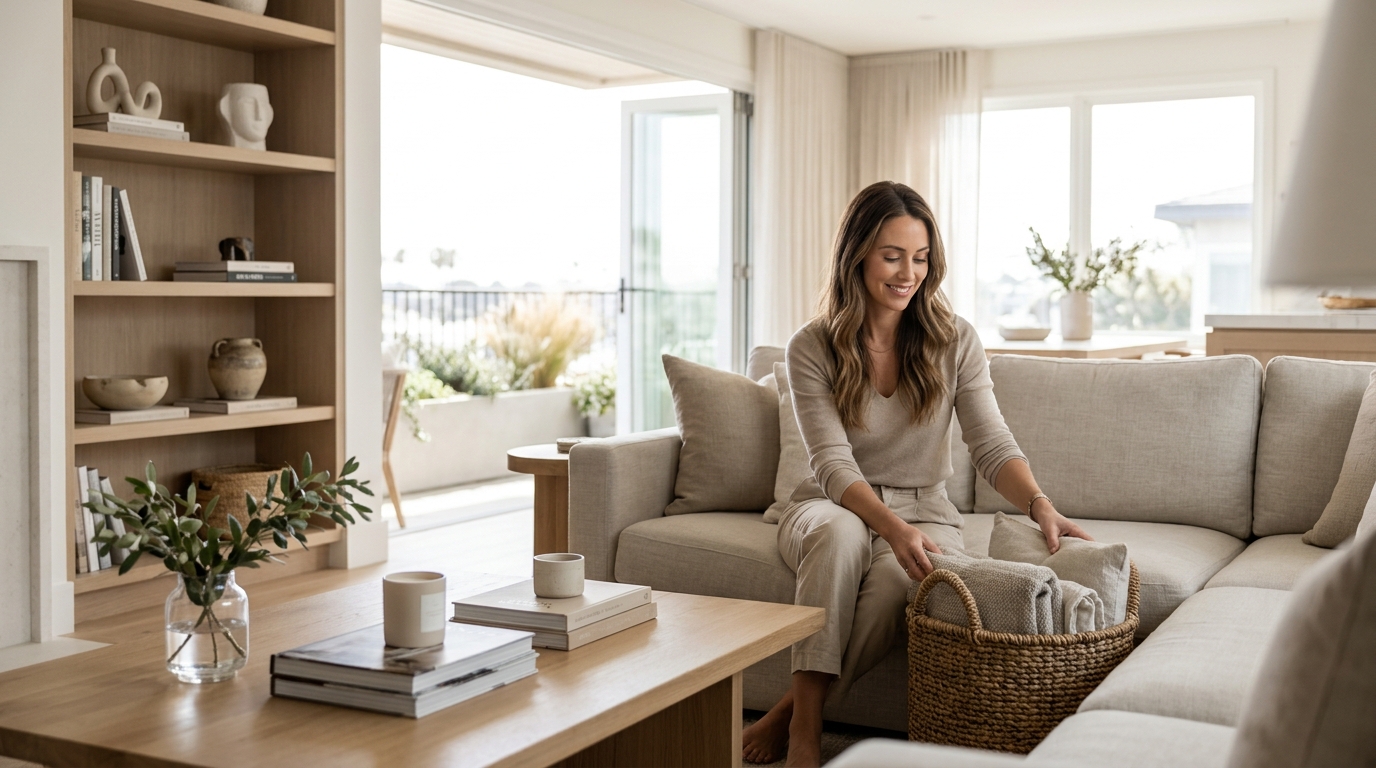
Decluttering matters more than depersonalization for most sellers because it directly impacts perceived space and functionality. Depersonalization is a secondary polish that helps buyers envision their own life in the home. For homeowners in Newport Beach and North Tustin, Cassie French recommends prioritizing clutter removal first, then layering in neutral decor to maximize sale price and speed.
Decluttering: The Foundation of Saleability
Decluttering is the process of removing excess items, furniture, and personal belongings to create open, functional living spaces. It is the most critical step in preparing a home for sale because clutter visually shrinks rooms and distracts buyers from the property's structural features. When a home is clutter-free, buyers can easily imagine how they would use the space, which is essential for creating an emotional connection.
Why Clutter Hurts Perceived Value
Research in environmental psychology suggests that cluttered environments increase cognitive load and stress. For a potential buyer, a crowded room signals a lack of space, even if the square footage is generous. In high-value markets like Newport Beach, where buyers expect spaciousness and flow, clutter can be a deal-breaker. It prevents them from seeing the architectural details, natural light, and premium finishes that justify the price point.
Strategic Removal vs. Total Emptying
There is a difference between decluttering and emptying a home. Total emptying, often called vacant staging, is expensive and can make a home feel cold and uninviting. Strategic decluttering involves removing 50% to 75% of personal items and excess furniture while keeping the home livable. This approach balances the need for space with the warmth of a lived-in environment. It allows buyers to see the potential of the room without the distraction of the seller's specific lifestyle choices.
Depersonalization: The Emotional Bridge
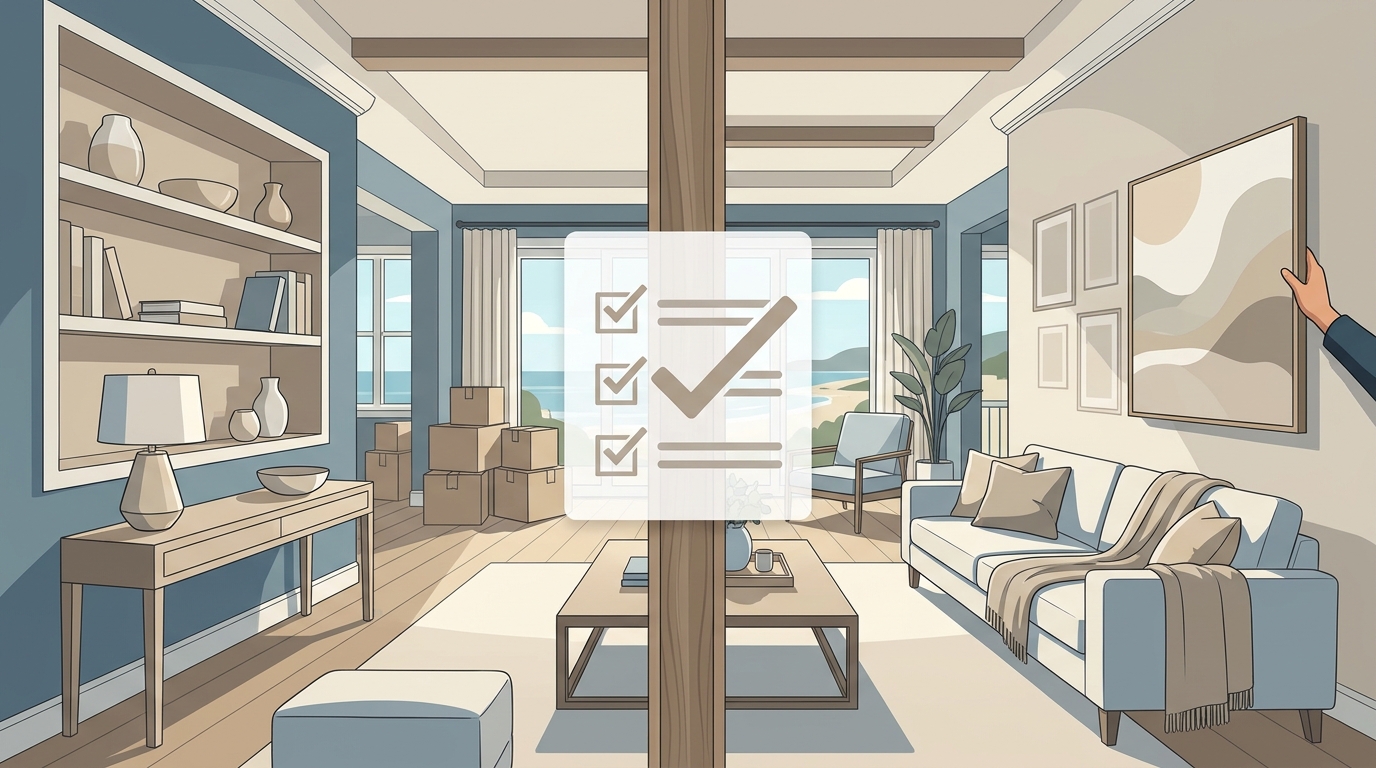
Depersonalization is the practice of removing personal photos, family memorabilia, religious items, and highly specific decorative choices to create a neutral canvas. While decluttering addresses quantity, depersonalization addresses identity. Buyers are not buying your life; they are buying a space for their own life. Personal items create a barrier that prevents buyers from projecting themselves into the home.
The Psychology of Neutral Spaces
When a home is depersonalized, it becomes a blank slate. This neutrality is powerful because it allows a diverse range of buyers to see themselves in the space. A family with children, a young couple, or a single professional can all envision their own lives in a neutral room. In contrast, a wall covered in family photos or a shelf lined with niche hobby items can alienate buyers who do not share those interests or life stages.
Limitations of Depersonalization
Depersonalization alone is insufficient if the home is still cluttered. Removing photos from a crowded shelf does not create space. It simply changes the type of distraction. Therefore, depersonalization is a finishing step, not a foundation. It works best when applied to a home that has already been thoroughly decluttered. It adds a layer of professionalism and neutrality that signals to buyers that the home is ready for a new owner.
Comparison: Decluttering vs. Depersonalization
| Criteria | Decluttering | Depersonalization |
|---|---|---|
| Primary Goal | Create perceived space and functionality | Remove identity barriers for buyer projection |
| Impact on Price | High; directly affects valuation of space | Moderate; improves emotional appeal |
| Effort Level | High; requires physical removal of items | Low to Moderate; requires sorting and hiding |
| Cost | Low; mostly time and labor | Low; mostly time and labor |
| Best For | Overcrowded or small homes | Well-maintained homes with strong personal decor |
Choose Decluttering If...
Choose decluttering as your primary strategy if your home feels cramped, if you have accumulated significant possessions over the years, or if you are selling a smaller property where every square foot counts. In neighborhoods like North Tustin, where lot size and indoor flow are key selling points, removing excess furniture and items is the single most effective way to increase perceived value. If your home is already relatively empty but feels "yours," decluttering is still the first step to ensure that the remaining items serve a functional purpose and do not crowd the space.
Choose Depersonalization If...
Choose depersonalization as your primary focus if your home is already spacious and well-organized but heavily reflects your personal identity. If you have a strong interior design style, extensive family photos, or niche collections, these elements can distract buyers. In luxury markets like Newport Beach, where buyers are accustomed to high-end finishes, a neutral presentation allows them to focus on the quality of the construction and the view. Depersonalization is the key to making a high-end home feel like a blank canvas for the next owner.
Frequently Asked Questions
Do I need to remove all my furniture to sell my home?
No, you do not need to remove all furniture. The goal is to reduce the volume of furniture to allow for easy movement and clear sightlines. Keeping essential pieces like a sofa, dining table, and beds helps buyers understand the scale of the rooms. However, removing excess chairs, side tables, and decorative items is crucial for creating a sense of space.
Is it better to stage a vacant home or a furnished one?
For most sellers, a partially furnished and decluttered home is more effective than a completely vacant one. Vacant homes can feel cold and make it difficult for buyers to gauge scale. A staged or lightly furnished home provides context and warmth. However, if you are selling a vacant property, professional staging is highly recommended to create the necessary emotional connection.
How much does decluttering cost?
Decluttering is primarily a time investment. If you do it yourself, the cost is low. If you hire professional organizers or movers, costs can vary based on the volume of items. In many cases, the return on investment from selling for a higher price far exceeds the cost of professional help. Cassie French often advises sellers to budget for professional staging and organization to maximize their net proceeds.
Can I keep some personal photos on display?
It is best to remove all personal photos. Even a few family pictures can make a home feel occupied and personal. If you want to add a touch of warmth, consider using generic, non-personal art or decorative objects. The goal is to allow the buyer to see their own life in the space, not yours.
What if I am selling a home with a strong personal style?
If your home has a strong personal style, you may need to temporarily store some of your favorite items. This is a difficult but necessary step for many sellers. Consider renting a storage unit for items that are too personal or too bulky to leave. This allows you to preserve your belongings while presenting a neutral, market-ready home.
Final Thoughts
Decluttering and depersonalization are complementary strategies, but decluttering is the foundation. Without a clutter-free base, depersonalization has limited impact. For homeowners in Newport Beach and North Tustin, the combination of both is the key to achieving top dollar. By removing excess items and neutralizing personal touches, you create a space that invites buyers to imagine their own future. To explore how these strategies can be applied to your specific property, contact Cassie French for a personalized consultation.