

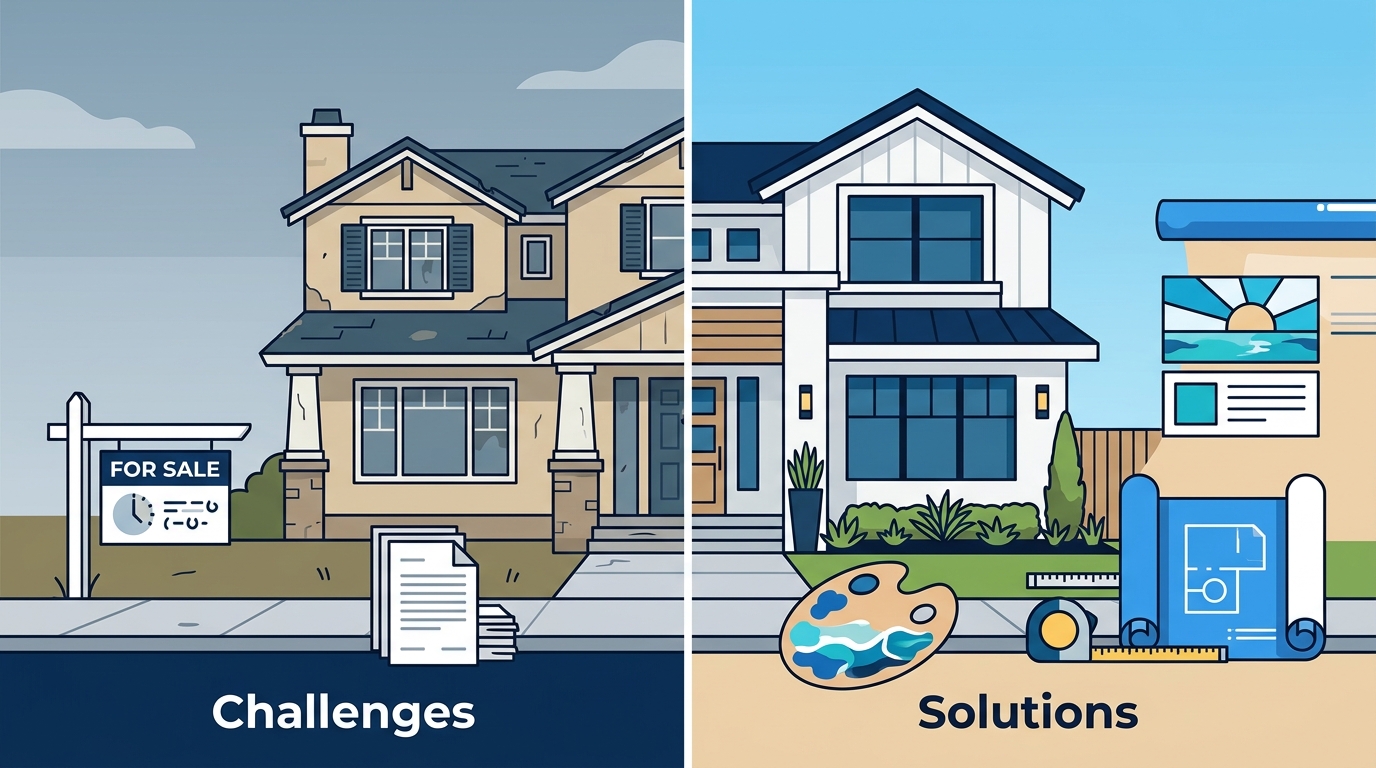
Selling a property in coastal Orange County requires precise execution and deep local market expertise. Recent industry reports indicate that homes in premium coastal zip codes experience a 14 percent longer average time on market when sellers skip professional pre-listing preparation. This delay directly impacts final sale prices and buyer negotiation leverage. Homeowners must anticipate specific friction points before listing their property. Understanding these operational hurdles allows sellers to implement targeted solutions that protect equity and accelerate transactions.
Navigating High Inventory and Buyer Competition
Coastal markets frequently experience inventory fluctuations that shift leverage between buyers and sellers. When new construction projects reach completion, local supply increases rapidly. This surge creates immediate competition for existing listings. Sellers often struggle to differentiate their properties without clear competitive advantages. Market saturation is the temporary condition where available listings exceed active buyer demand, forcing price adjustments and extended marketing windows. Homeowners can counteract this pressure by positioning their property as a premium asset rather than a standard commodity.
Strategic differentiation begins with neighborhood-specific positioning. Properties located near waterways or established historic districts require specialized marketing approaches. Buyers in these zones prioritize location prestige, architectural integrity, and privacy. Listing your property on a dedicated featured portfolio ensures maximum visibility to qualified purchasers. You must also leverage neighborhood-specific data to highlight unique amenities like beach access, school district rankings, and municipal tax structures. This targeted approach reduces time on market and strengthens initial offer velocity.
Managing Pre-Listing Preparation Costs
Upfront renovation expenses frequently deter homeowners from listing their properties. Many sellers hesitate to invest capital before securing a confirmed buyer. This hesitation often results in outdated interiors, faded exteriors, and functional inefficiencies that repel modern purchasers. Pre-listing renovation is the strategic investment in repairs, upgrades, and aesthetic improvements executed before a property enters public marketing channels. Skipping these improvements typically triggers lower appraisals and aggressive buyer counteroffers.
Professional staging directly addresses this financial friction. Expert staging transforms empty or cluttered spaces into aspirational living environments. Buyers visualize themselves inhabiting the home when furniture placement, lighting, and color palettes align with current design trends. Working with a dedicated home staging specialist ensures every room communicates maximum square footage and functional flow. Minor paint selections and fixture upgrades often yield the highest return on investment. These targeted improvements prevent buyers from deducting renovation costs from their initial offers.
Pricing Accuracy in a Volatile Market
Incorrect pricing remains the most common reason for prolonged listing stagnation. Overpricing triggers algorithmic penalties on major real estate platforms. Underpricing sacrifices hard-earned equity and invites bidding wars that rarely favor the seller. Comparative market analysis is the standardized methodology used to evaluate recent sales, active listings, and expired properties to determine a property's accurate market value. Relying on outdated sales data or emotional attachment to the home guarantees suboptimal results.
Accurate valuation requires hyperlocal data interpretation. Street-level sales vary significantly even within the same zip code. Properties facing direct ocean views command different metrics than interior lots. Utilizing a professional home valuation service provides data-driven pricing benchmarks rather than guesswork. This precision prevents the property from becoming stale on the market. Stale listings attract lowball offers and signal desperation to sophisticated buyers. Correct pricing from day one generates maximum exposure and competitive bidding scenarios.
Marketing to a Selective Buyer Pool
Traditional advertising methods rarely capture high-net-worth purchasers in luxury coastal markets. Buyers in this segment rely on curated networks, private broker tours, and targeted digital campaigns. Targeted buyer acquisition is the systematic process of identifying, contacting, and presenting properties exclusively to qualified purchasers who meet strict financial and timeline criteria. Generic advertising wastes budget and exposes the property to unqualified inquiries.
High-impact marketing combines professional photography, virtual tours, and strategic social media amplification. Each marketing asset must highlight architectural details, premium finishes, and lifestyle benefits. Publishing detailed market insights through a dedicated real estate blog establishes authority and attracts serious investors. Private broker open houses generate immediate feedback from industry professionals who represent active buyers. This concentrated exposure creates urgency and accelerates offer submission timelines.
Navigating Local Regulatory and Inspection Hurdles
Coastal municipalities enforce strict environmental and building codes that complicate standard transactions. Sellers frequently encounter unexpected disclosure requirements regarding flood zones, coastal development permits, and historical preservation restrictions. Compliance documentation is the mandatory collection of legal permits, inspection reports, and municipal approvals required to transfer property ownership without legal penalties. Missing paperwork delays closings and triggers buyer renegotiation requests.
Proactive compliance management prevents transaction derailment. Sellers should gather all existing permits, architectural drawings, and utility records before listing. Consulting with a licensed professional ensures every document meets current municipal standards. Reviewing the agent credentials and service framework guarantees that your transaction manager understands local regulatory nuances. This foresight eliminates last-minute surprises and keeps the closing timeline intact. Buyers appreciate sellers who provide complete documentation, as it reduces their due diligence stress.
Streamlining the Closing Process
Transaction management requires meticulous coordination between lenders, title companies, inspectors, and attorneys. Delays frequently occur when sellers fail to respond to repair requests or appraisal contingencies promptly. Efficient closing management depends on proactive communication and organized document submission. Sellers who maintain clear communication channels experience fewer extension requests and fewer financing fall-throughs.
Establishing a dedicated transaction command center prevents administrative bottlenecks. This system tracks every deadline, contingency removal date, and funding requirement. Coordinating directly with a licensed transaction coordinator ensures all parties receive accurate updates. Regular status meetings with the buyer agent prevent misunderstandings regarding repair credits or closing cost allocations. This structured approach minimizes friction and guarantees a smooth transfer of ownership.
Pre-Listing Strategy Comparison
| Strategy Component | Standard Approach | Premium Approach | Expected Outcome |
|---|---|---|---|
| Property Preparation | Minor cleaning and basic repairs | Professional staging and paint selection | Higher offer velocity and reduced days on market |
| Pricing Methodology | Automated online valuation tools | Hyperlocal comparative market analysis | Optimized equity capture and competitive bidding |
| Marketing Distribution | Basic MLS listing and social posts | Curated digital campaigns and broker tours | Qualified buyer pool and accelerated negotiations |
| Compliance Management | Reactive permit gathering | Proactive documentation and legal review | Seamless closings and reduced renegotiation risk |
Key Takeaways
- Properties skipping professional preparation experience a 14 percent longer average time on market according to coastal sales data.
- Strategic staging directly increases perceived square footage and reduces buyer renovation deductions.
- Hyperlocal pricing benchmarks prevent algorithmic penalties and stale listing stagnation.
- Curated marketing campaigns attract high-net-worth purchasers without exposing properties to unqualified inquiries.
- Proactive compliance documentation eliminates last-minute municipal permit delays.
- Transaction command centers reduce financing fall-through rates by maintaining clear communication channels.
Frequently Asked Questions
How does inventory fluctuation impact my home sale timeline?
Inventory surges temporarily shift leverage toward buyers, extending average marketing windows. Sellers must differentiate their properties through premium positioning and targeted outreach to maintain competitive offer velocity.
Is professional staging worth the upfront investment?
Professional staging transforms empty spaces into aspirational environments, directly increasing perceived value. Buyers consistently submit stronger initial offers on staged properties compared to vacant or cluttered alternatives.
Why do automated valuation tools fail in coastal markets?
Automated tools rely on broad regional data and cannot account for street-level nuances like ocean views or historical designations. Hyperlocal comparative analysis provides accurate pricing benchmarks that prevent overpricing penalties.
What documents do I need to prepare before listing?
Sellers should gather all existing permits, architectural drawings, utility records, and municipal compliance certificates. Complete documentation reduces buyer due diligence stress and prevents transaction delays.
How can I attract high-net-worth buyers without public advertising?
Curated digital campaigns and private broker tours target qualified purchasers directly. This concentrated exposure creates urgency and accelerates offer submission timelines without wasting marketing budgets.
What causes most transaction delays during the closing phase?
Delayed responses to repair requests, missing appraisal contingencies, and unorganized document submission cause most bottlenecks. Transaction command centers track every deadline to prevent administrative friction.
Ready to Sell Your Newport Beach Property?
Navigating coastal market challenges requires precision, local expertise, and unwavering focus on results. Homeowners who implement strategic preparation, accurate pricing, and targeted marketing consistently achieve superior outcomes. Schedule a comprehensive property consultation to review your specific market position and develop a customized selling strategy. Visit the contact page to book your private consultation and secure your preferred listing date.