
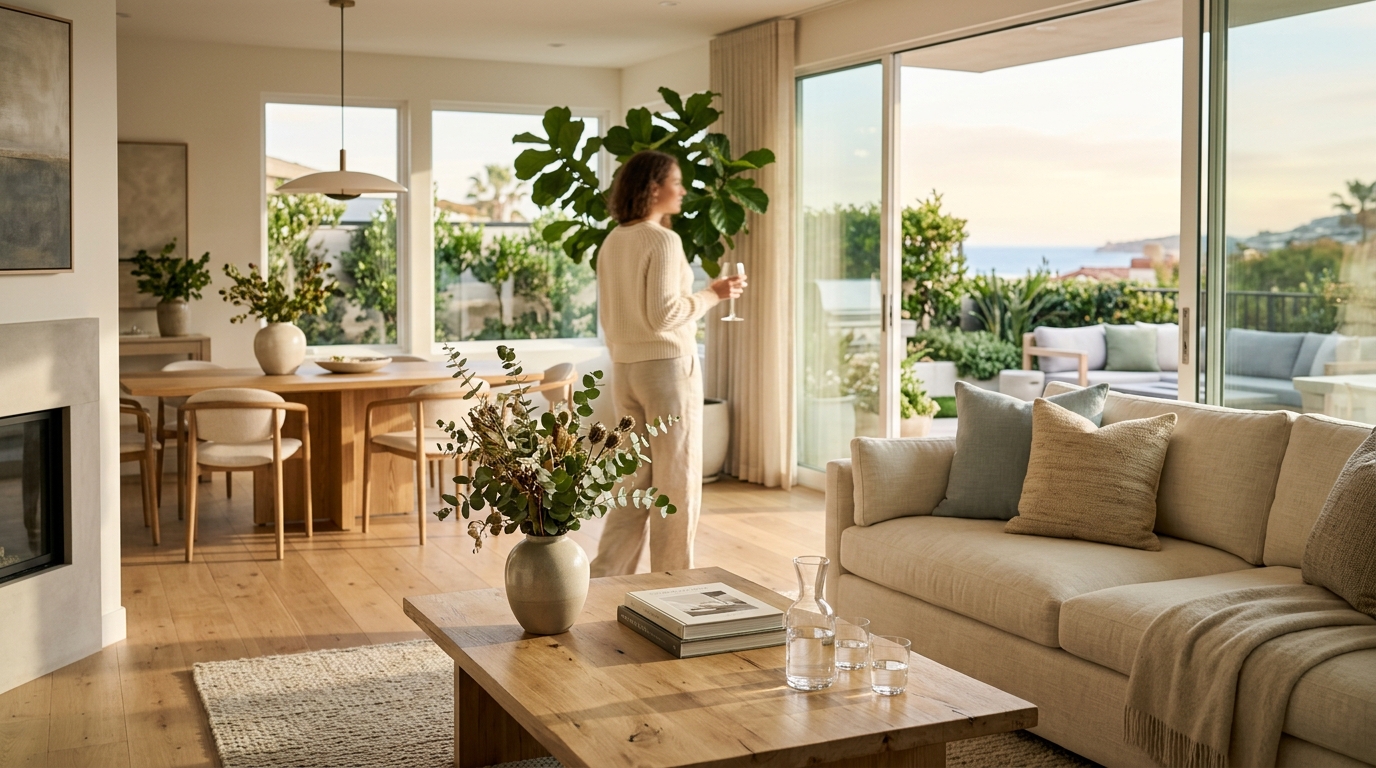
Key Factors to Consider When Staging a Home for Sale
Staging a home is one of the most effective strategies sellers can use to attract stronger offers and reduce time on the market. Whether you own a coastal property in Newport Beach or a family home in North Tustin, understanding the factors that drive successful staging can mean the difference between a stale listing and a bidding war.
This guide breaks down every major factor—from decluttering and curb appeal to modern trends like biophilic design and smart-home integration—so you can stage with confidence in today's market.
Why Home Staging Matters More Than Ever
Staging is not decorating. It is a deliberate marketing strategy designed to help the widest range of buyers emotionally connect with a property. According to surveys, staged homes can sell 73% faster and for 1–10% more than unstaged comparable properties. On a $350,000 home, spending roughly $3,500 on staging could yield up to a 900% return on investment.
The National Association of REALTORS® has reported that 23% of seller's agents saw a 1%–5% price increase on offers for staged homes versus similar unstaged listings. In competitive Orange County markets like Newport Beach and North Tustin, that edge can translate to tens of thousands of additional dollars at closing.
Factor 1: Decluttering and Depersonalizing
The single most important step in any staging project is removing clutter. Excess belongings make rooms feel smaller and distract buyers from architectural features like fireplaces, built-in shelving, and window views. Professional stagers often remove as much as half of an owner's furnishings so the home appears more spacious.
What to Remove
- Family photos, diplomas, and personal collectibles
- Excess throw pillows, magazines, and countertop appliances
- Bulky or redundant furniture pieces
- Refrigerator magnets and children's artwork
The goal is to create a neutral canvas where buyers can mentally move in. As one staging principle puts it: less clutter creates more imagination.
Factor 2: Curb Appeal and First Impressions
Buyers start forming opinions the second they arrive at your property. A neat, inviting exterior sets expectations for what is inside and instantly raises perceived value. Even modest investments in the front of the home pay significant dividends.
Actionable Curb-Appeal Checklist
- Pressure-wash the roof, siding, gutters, and fascia.
- Repaint the front door in a modern, neutral shade and replace worn hardware.
- Install new house numbers, a fresh welcome mat, and updated exterior lighting.
- Refresh flower beds with seasonal blooms, new mulch, and trimmed hedges.
- Ensure the walkway is clean and free of cracks.
In Southern California markets, outdoor living spaces carry extra weight. A tidy patio with minimal furniture styling can function almost like an additional room for buyers touring the property.
Factor 3: Prioritizing the Right Rooms
You do not need to stage every square foot. Focus your energy and budget on the spaces that influence buyer decisions the most. The living room, kitchen, and primary bedroom are consistently the most impactful rooms to stage.
Room-by-Room Priorities
| Room | Why It Matters | Quick Win |
|---|---|---|
| Living Room | Usually the first interior space buyers see | Float furniture away from walls to create conversational groupings |
| Kitchen | A top selling point for nearly every buyer demographic | Clear countertops completely; add a single bowl of fruit or fresh herbs |
| Primary Bedroom | Buyers want to envision personal retreat | Use crisp white bedding and two matching nightstands |
| Main Bathroom | Signals cleanliness and move-in readiness | Roll white towels, add a small plant, remove all personal toiletries |
Bathrooms and overlooked spaces like closets, laundry rooms, and entryways can add charm and function when given even minimal attention.
Factor 4: Furniture Placement and Flow
How furniture is arranged matters as much as what furniture is present. Buyers need to move freely through each room, and traffic flow should feel intuitive. One common misconception is that pushing all furniture against the walls makes a room feel larger—the opposite is actually true.
Float sofas and chairs toward the center of the room to create defined conversation areas. Place pieces to establish an obvious traffic path, and make sure buyers can access every window, fireplace, and architectural detail without obstruction.
Factor 5: Lighting That Sells
Bright, well-lit rooms photograph better and feel more welcoming during showings. Maximize natural light by opening all curtains and cleaning every window. Layer artificial lighting with ambient, task, and accent sources so no corner feels dark.
Smart lighting is a subtle but powerful selling point in today's tech-driven market. Voice-controlled bulbs or lights scheduled to turn on before showings signal that the home is modern and move-in ready.
Factor 6: Neutral Color Palettes and Modern Trends
Current staging trends favor warm, earthy neutrals—think soft beiges, warm taupes, and muted terracotta—over the stark whites and cool grays that dominated in previous years. These tones create a cozy atmosphere without overwhelming the space.
2026 Trends Worth Incorporating
- Biophilic design: Indoor greenery, natural wood textures, linen fabrics, and stone accents connect buyers to nature and promote a sense of wellness.
- Rounded furnishings: Curved sofas and oval coffee tables soften spaces and feel more approachable than sharp, angular pieces.
- Sustainable materials: Eco-friendly textiles like organic cotton and reclaimed wood appeal to environmentally conscious buyers.
- Flex spaces: A small home-office nook or wellness corner demonstrates the flexible living solutions that modern buyers actively seek.
Factor 7: Staging a Home Office or Flex Space
Remote and hybrid work remain central to how many buyers evaluate a home. You do not need a dedicated room to showcase this. Even a small corner in a living room or bedroom can be transformed into a desirable workspace with a minimalist desk, an ergonomic chair, a laptop, a small plant, and good task lighting. This simple setup instantly shows buyers that working from home is not just possible but pleasant.
Similarly, consider designating a quiet corner as a wellness nook with a yoga mat, a basket of weights, and a calming piece of art. Health and wellness are top priorities for buyers in 2026.
Factor 8: Scent, Sound, and Sensory Details
Staging engages more than just sight. Pleasant aromas—lavender, vanilla, freshly baked cookies—create emotional warmth. Avoid anything overpowering; subtlety is key. During open houses, soft background music can set a relaxed tone without distracting from the home itself.
Ensure the home smells clean rather than perfumed. Deep cleaning carpets, washing curtains, and airing out closets often does more than any candle.
Factor 9: Living in a Staged Home
Many sellers remain in their homes throughout the selling process. This is common and entirely manageable with a few adjustments. Designate staged rooms—living room, primary bedroom, kitchen, and main bathroom—that stay show-ready at all times. Keep lived-in areas like kids' rooms and laundry more relaxed.
Quick Tips for Occupied Staging
- Pack away all non-essential items and personal décor; consider off-site storage.
- Use attractive bins or baskets to quickly tuck away daily-use items before showings.
- Have a plan for pets during showings—board them or arrange for a friend to watch them.
- Post a quick-tidy checklist on the front door so nothing is forgotten on the way out.
Factor 10: Professional vs. DIY Staging
Professional stagers provide tailored advice based on your property and target buyer. Many offer full styling services complete with furniture, décor, and accessories. If budget is a concern, partial staging—focusing on the living room, kitchen, and main bedroom using your existing furniture—is a cost-effective alternative.
Virtual staging is another option for vacant homes, digitally adding realistic furniture to listing photos to help buyers visualize the space without the cost of physical staging.
When Professional Staging Makes the Most Sense
- Your market is competitive with multiple unsold listings.
- The home has been on the market for 30-plus days without offers.
- Comparable homes in your area are staged.
- You need to sell quickly and cannot risk extended days on market.
Factor 11: Photography-Ready Presentation
A well-staged home makes your online listing stand out with stronger, more eye-catching photos. Because the vast majority of buyers begin their search online, your staging must translate to a screen. Clean lines, uncluttered surfaces, and intentional lighting are the foundation of scroll-stopping listing images.
Work with your agent to schedule professional photography immediately after staging is complete—before daily life has a chance to undo your work.
Key Takeaways
- Decluttering and depersonalizing is the foundation of every successful staging project.
- Curb appeal sets the tone before a buyer ever walks through the front door.
- Focus staging budget on the living room, kitchen, and primary bedroom for maximum impact.
- Float furniture away from walls, maximize light, and use warm neutral tones.
- Incorporate 2026 trends—biophilic design, flex spaces, and smart-home touches—to resonate with today's buyers.
- Staged homes sell faster and often for significantly more, making staging one of the highest-ROI investments a seller can make.
Frequently Asked Questions
How much does home staging cost?
Costs vary widely based on market and scope. A consultation alone may run a few hundred dollars, while full staging with rented furniture for a typical home can range from $2,000 to $5,000 or more. In high-value markets like Newport Beach, the investment is typically recouped many times over through a higher sale price.
Is staging worth it if I am still living in my home?
Yes. Staging while living in your home is common and effective. Focus on keeping key rooms show-ready, pack away personal items, and use quick-tidy routines before each showing.
Which rooms should I stage first?
The living room, kitchen, and primary bedroom consistently deliver the greatest return. Bathrooms and entryways are strong secondary priorities.
Can I stage a home myself without hiring a professional?
Absolutely. Many free tactics—rearranging furniture, opening curtains, and deep cleaning—make a noticeable difference. If budget allows, a single consultation with a professional stager can guide your DIY efforts effectively.
Does staging help in a seller's market?
Staging helps in any market, but its impact is most measurable in competitive or balanced markets. In a red-hot seller's market with bidding wars, staging may be less critical, though it still improves listing photos and can push offers even higher.
What are the biggest staging mistakes to avoid?
Over-decorating, leaving personal items visible, ignoring curb appeal, and using overly bold or polarizing paint colors are the most common pitfalls. The objective is broad appeal, not personal expression.
Ready to Stage and Sell Your Home?
Cassie French is a Newport Beach and North Tustin real estate agent whose proven pre-listing strategy centers on strategic staging, paint selection, minor renovations, and high-impact marketing designed to attract more buyers and stronger offers. If you are thinking about selling, connect with Cassie for a personalized staging consultation and a plan to get your home market-ready.